


Ticks are one of the most common parasites affecting dogs, especially during the summer months. Although they are small, ticks can cause a range of health problems in dogs, including tick-borne diseases such as Lyme disease, babesiosis and ehrlichiosis. It’s important to learn how to prevent and treat ticks on dogs to keep your pet healthy and happy. In this guide we explain how to identify the different types of ticks on dogs, which diseases they can transmit, how to remove a tick from a dog step by step and what to do if your dog has ticks.
Types of ticks on dogs: what they look like and how to identify them
There are more than a dozen tick species in Europe, and several of them parasitize dogs. The ticks that affect dogs are “hard” ticks: they go through several stages (larva, nymph and adult) and anchor themselves to the skin with their mouthparts to feed on blood. According to the European guidelines from ESCCAP, the ones most often found on dogs belong to the genera Ixodes, Rhipicephalus and Dermacentor. These are the main ones:
- Brown dog tick (Rhipicephalus sanguineus): typical of southern Europe and present in Spain. It has a strong preference for dogs and, in temperate areas, it can complete its life cycle inside homes and kennels. It can transmit ehrlichiosis and babesiosis, among other diseases.
- Ixodes ricinus (sheep tick): dark in appearance, it’s the one many owners describe as a black tick. It is widespread across Europe and is more common in areas with vegetation and humidity. It can transmit Lyme disease (borreliosis) and anaplasmosis.
- Dermacentor reticulatus: it is usually larger than other species and can transmit babesiosis (Babesia canis).
What ticks on dogs look like varies by species and, above all, by whether they have fed. Before feeding they are flat and only a few millimeters long, so small ticks on dogs easily go unnoticed in the coat. Once a female has fed, she swells: she can multiply her weight up to 120 times and reach up to 1 cm, looking a bit like a small bean. The large ticks we sometimes find on dogs are therefore usually females engorged with blood.
Where ticks hide on a dog and how they get on it
Ticks can turn up anywhere on the body, but they prefer areas of thin, hard-to-see skin: the face, ears, armpits, groin, between the toes and around the anus. That’s why, besides going over the coat, it’s worth checking carefully for ticks in your dog’s ears and on the paws, between the toes.
Their life cycle explains how they reach your dog: after feeding, the tick drops to the ground to molt into the next stage, then climbs onto vegetation to wait for a new animal to latch onto. They don’t jump or fly: they grab on when your dog brushes against grass or bushes.
Tick-borne diseases in dogs
When we talk about tick disease in dogs we’re not referring to a single illness but to several, depending on the tick species and the area. Are ticks dangerous for dogs? They can be: a heavy infestation can cause anemia from blood loss, and ticks are among the most efficient vectors of bacteria and parasites. That said, not all ticks are infected and not every bite leads to disease. These are the main diseases that ticks can transmit to dogs in our area:
- Borreliosis or Lyme disease: transmitted by ticks of the genus Ixodes. In dogs it usually goes unnoticed and, when there are symptoms, they are typically general malaise and lameness.
- Canine ehrlichiosis: caused by Ehrlichia canis and transmitted by the brown dog tick. It can range from moderate to severe.
- Anaplasmosis: caused by bacteria of the genus Anaplasma. It is usually mild or goes unnoticed, although it can cause lethargy.
- Babesiosis: caused by a parasite that infects red blood cells and can produce moderate to severe illness.
- Rickettsiosis (Mediterranean spotted fever): present in the Mediterranean area. In dogs it is usually asymptomatic or causes mild listlessness, and it can also affect people.
- Hepatozoonosis: unlike the others, it isn’t spread by a bite but when the dog swallows an infected tick.
Tick bites on dogs: what they look like and what to watch for
A tick bite on a dog usually leaves a small reddened wound where the tick was attached. If the tick is removed badly and part of its mouthparts stays in the skin, the wound can become infected or a small abscess can form. Over the following days, check that the redness doesn’t spread and that no swelling or pus appears.
The signs of a tick-borne disease are often non-specific: fever, listlessness, loss of appetite, lameness or joint pain and, in severe cases, anemia or bleeding. They can take anywhere from a few days to several weeks to appear (and months in the case of Lyme disease), so it’s a good idea to note the date you removed a tick so you can give your vet that information if your dog seems unwell.
Can dog ticks bite people?
Some tick-borne diseases, such as borreliosis or anaplasmosis, can also affect people, and ticks such as Ixodes ricinus can bite both animals and humans. The brown dog tick, on the other hand, has a strong preference for dogs. Even so, wear gloves or wash your hands well after removing a tick, and check your own skin too after a walk in the countryside.
Preventing ticks on dogs
The best way to protect your dog from ticks is prevention. Here are a few tips to keep ticks from attaching to your dog:
- Check your dog regularly: Carefully go over your dog’s coat and skin for ticks after they’ve been in areas where ticks are likely to be, such as woods or tall grass fields.
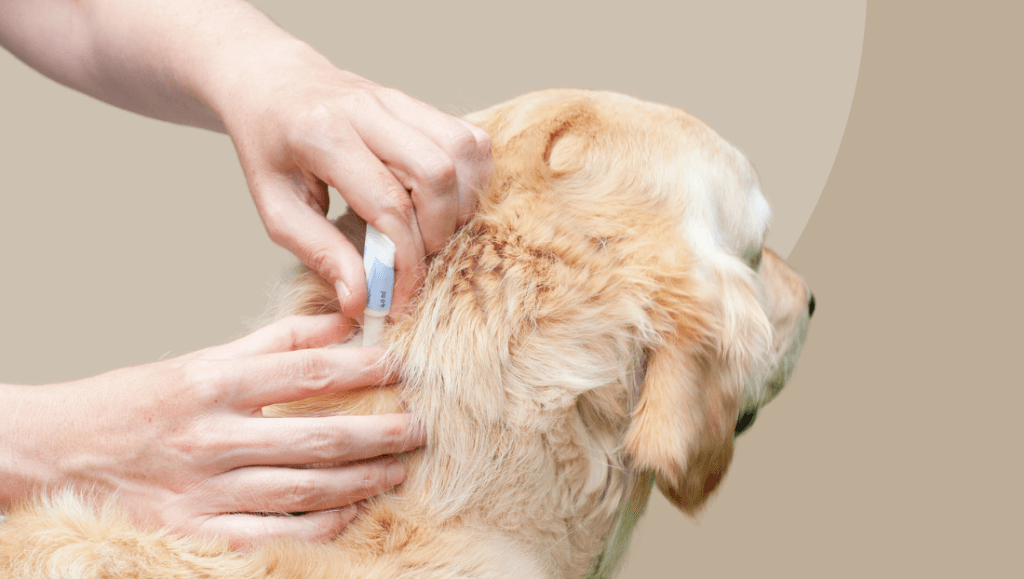
- Use a tick-repellent product: There are many products on the market that can help prevent ticks on dogs, including repellent collars, shampoos and sprays. Other common options are antiparasitic spot-on pipettes, applied directly to the skin at the withers, the area between the shoulder blades, and antiparasitic tablets (from the isoxazoline family), which act quickly and are not affected by water. Frequent baths can reduce the effectiveness of some pipettes, so follow the package leaflet on when you can bathe your dog. Always choose a product authorized for dogs and, if you live with cats, never use a dog product on them: some are toxic to cats. Protection should also cover the whole period when ticks are active: in temperate areas such as Barcelona they can feed all year round, although they are more abundant in spring and summer.
- Keep your garden and home free of ticks: Ticks live in areas with tall grass and humidity, so it’s important to keep the lawn trimmed and outdoor areas clean. It’s also a good idea to vacuum the house regularly and wash your dog’s bedding to prevent a tick infestation at home. Note that the brown dog tick can complete its life cycle inside homes, so if you find ticks in the house, check the places where your dog rests too.
Ticks on puppies: how to protect them
Puppies can get ticks too, and not every antiparasitic is suitable at every age: each product’s leaflet states the minimum age and weight for using it. Check puppies that are starting to go out regularly, and never use an adult product “just in case”. At our clinic we can help you choose the right protection as part of their preventive medicine plan.
Fleas and ticks on dogs: are they prevented in the same way?
They are different parasites, but they share a season and an environment, and both fleas and ticks can transmit diseases. Many external antiparasitics work against both, but not all of them: check the leaflet to see which parasites each product covers and how long it stays effective.
Tips for tick-free walks and routes
When we go out for a walk with our dog, it’s important to watch out for ticks. These small parasites can transmit dangerous diseases to our furry friends, so it’s important to take steps to protect them. Here are a few tips to prevent ticks during walks:
1. Choose safe routes: Avoid walking through areas with dense vegetation and tall grass, where ticks are most likely to be found. Opt for paved paths or trails that aren’t near wooded areas.
2. Protect them properly: Use suitable accessories for your dog. You can use a tick-repellent collar or a neck band. Avoid shirts and jackets, especially in summer: they can cause heatstroke and are not a complete barrier against ticks.
3. Check their coat: After the walk, carefully check your dog’s coat for ticks. Pay attention to the most prone areas, such as the armpits, groin and neck. Use a dog comb to go over the coat in more detail.
4. Use a tick repellent: There are many products on the market that help repel ticks, such as sprays and lotions that you can apply before going out for a walk.
Treating ticks on dogs
If you find a tick on your dog, it’s important to remove it right away to prevent it from transmitting diseases. Here are a few tips for removing a tick from your dog:
- Use fine-tipped tweezers to grasp the tick as close as possible to your dog’s skin.
- Gently pull the tick straight out with steady, firm pressure. Don’t twist or crush it, as this can cause it to release more bacteria into your dog’s skin.
- Clean the area with soap and water and apply an antiseptic.
If your dog has ticks, the priority is to remove them as soon as possible: the less time they stay attached, the lower the risk of them transmitting disease. Wear gloves. If you use tweezers, always pull in a straight line without twisting. If you have a hook-shaped tick remover, follow the manufacturer’s instructions: these tools work by gently rotating the tick and help remove it whole. Don’t use oil, alcohol, ether or other substances to make it let go: this is not recommended.
If your dog shows signs of illness after you remove a tick, such as fever, lethargy or loss of appetite, take them to the vet right away.
What to do if the tick stays inside your dog’s skin
Sometimes, when you remove a tick, the mouthparts (what we usually call “the head”) stay in the skin, or it looks as if the tick is inside your dog’s skin because you can only see a small bump. In that case:
- Don’t dig at it with needles or your nails: you can inflame the area and encourage an infection.
- Clean the area with soap and water and apply an antiseptic.
- Watch the area over the following days.
A small remnant is usually eliminated by the body itself and sometimes leaves a small bump on the skin; the important thing is not to handle it. If the redness spreads, swelling or pus appears, or your dog licks or scratches the area persistently, it’s time to come to the clinic so we can check the wound and remove any remains. The best way to avoid this is to grasp the tick as close to the skin as possible and remove it with the right technique for your tool: with tweezers, in a straight line and without twisting.
Do home remedies for ticks on dogs work?
It’s common to look for home remedies for ticks, such as vinegar, garlic, essential oils or lemon, but there is no evidence that they protect reliably, and some can irritate the skin or be toxic to dogs. The safest and most effective approach is antiparasitic treatment: removing the ticks that are already there and applying or giving an antiparasitic authorized for dogs (pipette, collar, tablet or spray), always following the package leaflet, to eliminate the ones you can’t see and protect your dog for the rest of the season.
In short, ticks can be a serious problem for dogs, but with proper prevention and quick, effective treatment, your dog can stay happy and healthy. Remember to check your dog regularly for ticks, and don’t hesitate to contact us if you have questions or concerns about ticks on your pet.